info.lt@cieautomotive.com
 +370 343 98940
“What I Design Comes to Life”: Šarūnas Miliauskas on His Journey into Engineering
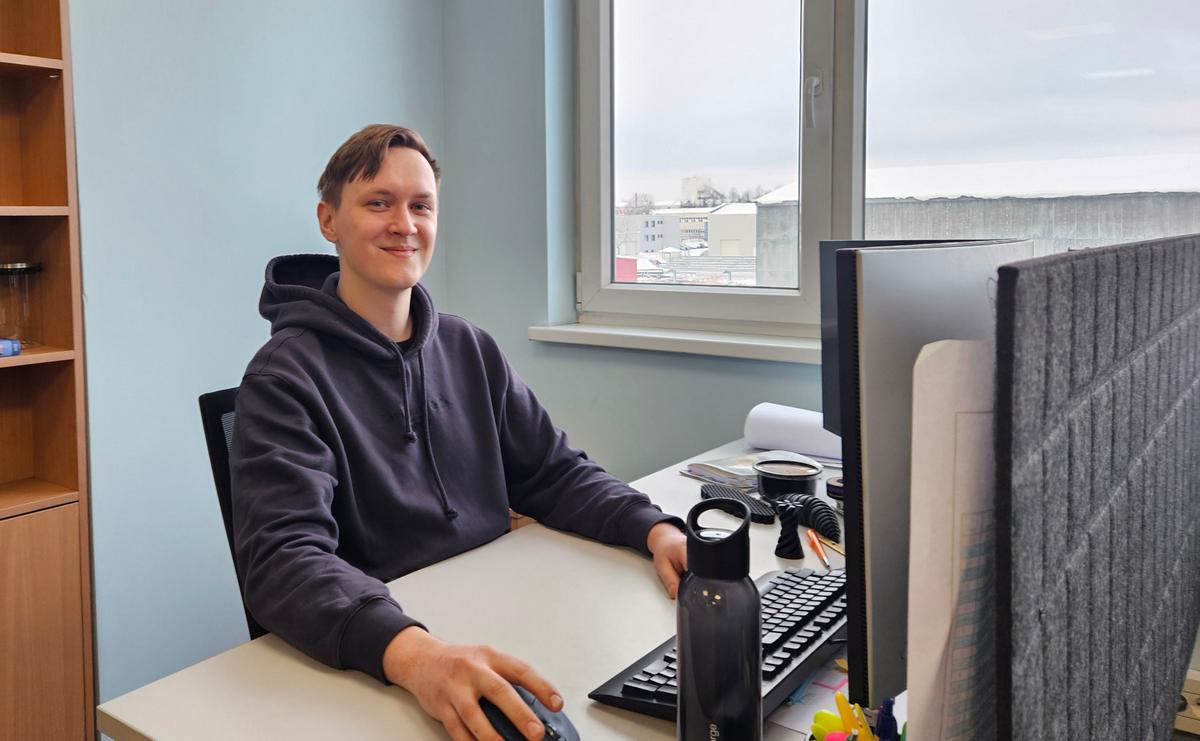
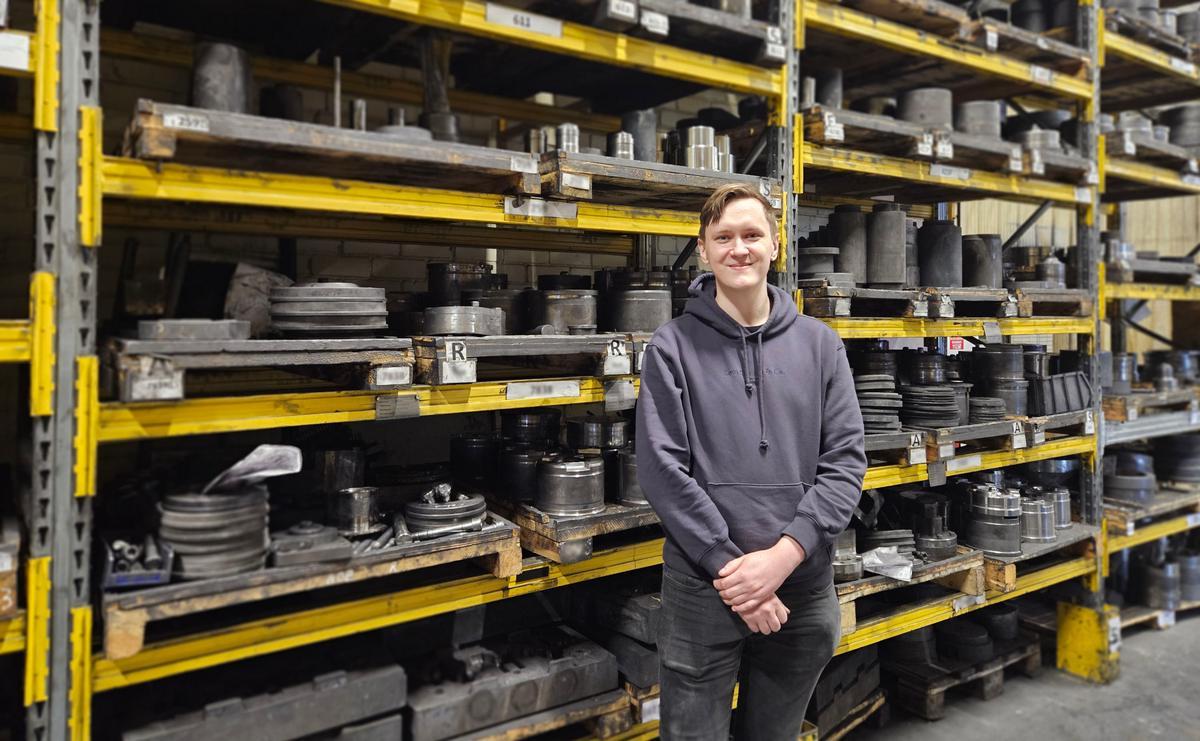
When Volkswagen or another automotive manufacturer orders a new component, someone needs to work out how to manufacture it. At CIE LT Forge, this is one of the tasks undertaken by Tooling Design Engineer Šarūnas Miliauskas. He designs the tooling required for production, runs simulations and sees how ideas developed on a computer screen become working solutions on the factory floor.
“At our company, a tooling design engineer develops the equipment needed to manufacture specific components. We assess the entire production process, run simulations and pass the completed technical drawings on to the production department. Later, we can see how everything works in practice,” Šarūnas explains.
A Journey into Engineering Driven by Curiosity
Šarūnas’ interest in designing and building things began while he was still at school. Around the eighth grade, he started to realise that instead of simply buying things, he could try making them himself. He began with woodworking before moving on to metal structures, bicycles and even an attempt to build a scooter.
He later chose to study Vehicle Engineering at Kaunas University of Technology (KTU). Alongside his academic studies, hands-on projects played an important role in his development. Together with a fellow student, he built a racing simulator for the university, which they later presented at the Technorama exhibition, where the project won a prize.
“Practical experience allows you to put theoretical knowledge to the test. Theory tells you how things should work, while practice shows you how they actually work. That gave me a lot of confidence. I realised that what I designed could really work,” he says.
For Šarūnas, seeing his designs turn into working solutions remains one of the most motivating aspects of engineering.
Engineering Is a Team Effort
One of the most interesting parts of Šarūnas’ daily work is the initial stage of a new product development project. This is when he needs to determine what equipment will be required for the manufacturing process, how it should function and how it can be produced.
Another important part of his role involves technical documentation, ensuring that drawings are accurate, traceable and clear enough for other specialists to understand and continue the work.
Although much of his time is spent working at a computer, engineering is far from a solitary profession. Different specialists bring different areas of expertise and regularly share their knowledge.
“It’s a team effort. I have more experience in 3D printing and milling, while another colleague has extensive knowledge of forging processes. We constantly exchange information and consult with process engineers. Working alone, everything would take much longer,” Šarūnas explains.
Another source of motivation is knowing that the solutions he designs contribute to the manufacturing of components for the global automotive industry.
“Seeing something you created on a computer screen become a real product gives your work a greater sense of value. You feel part of something bigger – a global network,” he says.
Šarūnas also values the opportunities for continuous learning and professional development at CIE LT Forge. Employees can take part in both specialised technical training and broader professional development courses during working hours.
The Best Way to Discover Engineering Is Through Practice
When talking about the next generation of engineers, Šarūnas repeatedly emphasises the importance of hands-on experience. He believes that an early interest in mechanics, building things or technology makes it easier to understand theoretical concepts and apply them in practice later on.
He saw this approach in action when he attended a RoboForge League event, of which CIE LT Forge is the main sponsor.
“I was surprised to see such young children building fairly complex robots and making their own engineering decisions. The atmosphere was full of excitement and energy. Events like this give young people in our city an opportunity to explore technology and get a real taste of engineering,” he says.
His advice to young people who think engineering might be too difficult is simple: don't limit yourself to theory – experiment and learn by doing.
“Engineering isn't just numbers on paper. It's about real, tangible things and finding ways to improve them. You simply have to start doing things, notice what doesn't work and ask yourself why. Finding answers to those questions is what engineering is all about,” Šarūnas advises.
Reflecting on the wider value of the engineering profession, he points out that we rarely stop to consider how much engineering goes into the products and technologies we use every day.
“People use all kinds of devices without thinking about how much engineering work has gone into making them convenient, functional and accessible. Almost everything around us that has been created by people has, in one way or another, been shaped by engineers – even software,” Šarūnas concludes.